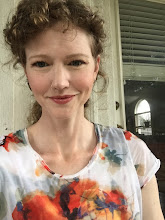
Monday, September 21, 2009

Tomato Soup Recipe & How-To Video

Tomato Soup by Arden Durham


Ingredients:

12 medium/large ripe tomatoes (my favorite are beefsteak)

1 tablespoon course Celtic sea salt

Season with basil, oregano, thyme, hot peppers, you choose!


Utensils:
Large glass pot

Medium glass pot

Masher

Heat resistant spatula

Spoon rest

Electric hand held immersion blender

Mesh strainer

Ladle

Soupspoon

Serrated knife

Cutting board


Directions:

* Wash tomatoes and core out where the stem was connected.
* Cut tomatoes in the large glass pot so as not to lose any juices and give them a good squeeze.
* Add course Celtic sea salt.
* Heat on high until they come to a boil, stirring frequently to avoid scorching.
* Reduce heat to a simmer, mash then stir making sure nothing is stuck to the bottom.
* Repeat mashing and stirring every few minutes until you feel there is no longer any resistance left in the tomatoes, about 8-10 minutes.

* Use the electric immersion hand blender to liquefy the remaining pulp.
* Ladle into the mesh strainer in the medium pot.
* Push everything you can through, at first by stirring then by using the back of the spoon- you should only have a spoonful of waste (seeds and skin) left to discard.
* Scrape the outside of the strainer between rounds of ladling to make it easier and keep the soup thick.
* Season to taste.
* You can use this as a base for vegetable soup, the beginnings of ketchup, or reduce it for paste, etc.


Tip: Let the heat do most of the work for you, and if you cover as often as possible this will help.

Sunday, September 13, 2009

The Insensitive Ignorant

Whenever it comes up that I cannot eat wheat products, someone will inevitably exclaim something like, "Oh, I just couldn't live without bread!" 

I have two well rehearsed responses to this kind of declaration. 

One is more polite and diplomatic and it goes like this, 
"It's amazing what you can live without if it means you will live." 

Another is not so polite and confronts the premise directly and goes like this, 
"Then if you were me, you would be dead." 

Over a decade of this same scenario has played out. I'm using the second phrase more frequently. Meeting me may be the first time someone has ever been confronted with such a notion, but I have had to deal with hundreds of such ignorant interactions. Forgive me if my patience is wearing thin when I did not ask to be this kind of educator. I try to be kind, but I would like some of that compassion directed back my way!

This is not just because the person is insensitive due to ignorance. I mean, not many people feel free to walk up to a person in a wheel chair and say, "Oh, I just couldn't live without walking." Most people have become sensitive to certain kinds of differently abled people being in their midst and appreciate what they can do. But, people do not see my disease and disabilities in the same way- mostly because they are not visible in the same ways and I became a master of covering what has been visible. Most folks simply don't understand that food can be deadly, especially if they eat it and are "fine." 

I also say these things to remind myself. It is challenging to deal with constant peer pressure, put downs, disbelief, dismissal, and all sorts of other negative emotional influences people throw out there. "You can't possibly be right!" "That doesn't make any sense!" "One taste can't be that big of a deal." "I would be so depressed if I had to live the way you do." Those are exactly the thoughts and premises that will get me into trouble, and they illuminate how American culture embraces justifications, rationalizations, and excuses. It's really not too hard to be in control over what goes in my mouth. Just a taste will hurt. I really don't need people encouraging me to hurt myself for a 30 second experience in my mouth. That's not very nice. I wish folks would stop doing that- and then my life would be less depressing! 

I am breaking the food addiction of American culture. 

Where there is a will, there is a way. 

Monday, September 7, 2009

Part 2: Childhood Food Clues

Fortunately for me, my mother did cook daily when I was a child, and she did it well. She used real, whole foods and it was rare that anything came out of a can. Mostly, we ate beef roasts and two vegetables for dinner. Rarely did a dinner include wheat as an intricate ingredient, but sometimes slices of white bread were available on a plate. This is one of the blessings of my childhood that probably kept my symptoms from being even worse. I was having one meal a day that was relatively gluten, starch, and sugar free.

My mother cooked as long as my father was home for dinner. When he was not, we ate microwaveable meals, pizza or fast food as a treat. Unfortunately for me, my father lived separately from me and my mother for the first time when I was 13 and my mother ceased to cook. My sister was already long gone out of the household as she has almost a decade on me. I was content to eat Lean Cuisine and Stouffer’s microwavable meals. If my mother wanted to be liberated from the kitchen, then I wanted her to be free. After all, food is food, no matter what it is or where it comes from- or so I thought.

My lunches were the same as they had always been in school, a sandwich (white bread, processed deli meat, pre-sliced processed cheese) with corn chips and juice. They started to include Little Debbie snacks, too. I had discontinued breakfast as any kind of routine in junior high because it caused me to feel ill. I settled for a glass of orange juice. In elementary school breakfast was usually milk and cereal and it never really sat well. I would often feel nauseous if I smelled cooking fat smoke in the morning. I would snack on corn chips or cake snacks after school. I had a real sweet tooth, otherwise known as an addiction to sugar, as well. I consumed candy whenever I could. So, once my mother quit cooking, I was eating almost all processed, industrial food. My symptoms gradually got worse the more of these foods I ate, but I did not make the association. Food as the source of illness wasn’t even close to a thought in my mind.

My mother and I lived with my father again for my freshman year of high school, and most of the time she cooked again. He left again at the beginning of my sophomore year and I expanded my range of microwavable foods. Every year I was missing more school because I was ill with one thing or another, acutely and chronically, labeled and treated or not. I occasionally tried my own hand at cooking, a lot of times vegetarian, but I wasn’t very good at it and the lack of reward meant I could count on both hands how often this happened. I also began to eat out with friends once I had my driver’s license. I would get a home cooked meal every now and again at my friend’s house. Late in high school, I was tested for allergies, received shots for a year or so, but never followed the direction not to eat citric acid. This was the first food clue. I ignored it completely. I mean, citric acid seemed to be in everything, and it couldn’t be making that much of a difference- so I persisted in denial of even trying to eliminate a source of conflict for my body. I chose to stay ignorant to feeling good.  

Sunday, August 30, 2009

yogourmet multi

I use the yogourmet multi electric yogurt maker.

I also have an additional insert so that I can start making more yogurt or french cream before I've finished my last batch. 

I use only one kind of their starters.

I have altered my yogourmet multi with a dimmer switch in order to control the temperature.

French Cream (thick yogurt or Creme Bulgare) Recipe & How-To Video


French Cream (Thick Yogurt)by Arden Durham

Ingredients:
2 quarts 1/2 & 1/2
4 packets yogourmet Freeze-dried yogurt starter & Crème Bulgare starter

Utensils:
2 small glass-measuring cups
2 soupspoons
yogourmet multi yogurt maker and insert
Glass pot large enough to hold 1/2 gallon of liquid
Heat safe spatula
Scissors
thermometer
Plastic wrap (optional if your pot has a lid, preferably seal tight)

Directions:
* Repasturize the 1/2 & 1/2 by slowly bringing it up to a simmer (180 degrees Fahrenheit) over medium low heat, stir frequently to prevent scorching. This will take about 35 minutes Do not boil (182 degrees.)
* Remove from heat, cover and let cool to room temperature (80 degrees F or less, you can use the fridge to accelerate the process to about 4-5 hours.)
* Skim the film that has congealed on the surface off with a spoon. Otherwise, your end result will be lumpy.
* Introduce the desired microbes by emptying the 4 packets of starter into the yogourmet insert and add 2 spoonfuls of 1/2 & 1/2.
* Mix slowly and gently into a paste using the spatula, then you may add more liquid liberally using a glass-measuring cup.
* Cover the insert and place in the yogourmet multi with water up to the second or top line on the inside.
* Ferment for 24-30 hours at 100-110 degrees F.
* Refrigerate until well chilled, about 6-8 hours.

Tip: You will need to alter the yogourmet multi to achieve the correct temperature for fermentation. I attached a dimmer switch to mine and ran test batch after test batch until I secured 100-110 degrees F over a long time. This does mean that you need to plan on at least your first batch being inedible. It is worth it to make sure that every batch from there on is perfect!

Thursday, August 20, 2009

Good Books

Here are some of my favorite reads that have helped me to heal.

Breaking the Vicious Cycle by Elaine Gottschall is a bit chewy. Bless this woman for doing what she did, but I do have criticisms. One of which is that she plagiarized Dr. Haas. Another is that her writing is poorly organized. A third is that she gave permission to cheat, which is counterproductive to the diet. However, if she hadn't continued in the footsteps of Haas, who knows if any of us would have a clue about carbohydrate specific diets and their healing benefits.


Hunger: An Unnatural History by Sharman Apt Russell is absolutely fascinating, but digestive disorders are left out. Still fascinating, informative and helpful. This book turned me on to Ancel Keys in general through his human starvation tests. Keys was highly influential on our current American diet, for better and for worse.


real food: what to eat and why by Nina Planck is the book I would like to give every person I know who eats the Standard American Diet, aka, SAD. Fat is good for you.


Nutrition and Physical Degeneration by Weston A. Price should be given to every health care practitioner. Admittedly, I am still reading this one. The Weston A. Price foundation is a wonderful resource that I think everyone with digestive disorders would benefit from checking out, and support them if you can.


The Omnivore's Dilemma by Michael Pollan at least starts to get some of my food values into the mainstream, and it is a delightful read. It really is too bad that we are destroying our environment, our economy, and our bodies in the name and game of industrialized food.


Gut and Psychology Syndrome by Natasha Campbell-McBride is much easier to comprehend than BTVC. The brain and body are not separate.


Management of Celiac Disease by Sidney Valentine Haas is one that I checked out from the biomedical library at my local university. If you don't have the disposition towards medical texts, probably best to leave this alone. If you do have the scientific mind, don't pass this one up. If you don't have the money, go on an expedition once you have the energy to undertake such an adventure! He is the one who figured this whole mess out, and there are secrets inside that seem to have been forgotten along the way. Bless this man for all his observations, but don't forget he worked with children and that adults have different nutritional needs and do not heal as quickly.


Probiotics: Nature’s Internal Healers by Natasha Trenev is the best way to understand internal culture.


Digestive Wellness by Elizabeth Lipski is a good overview with lots of options for treatments.


Adrenal Fatigue: The 21st Century Stress Syndrome by James L. Wilson helped me to convert many aspects of my lifestyle.


The Yeast Connection by William G. Crook is where it all began for me back in 1991.

Monday, August 17, 2009

Part One: Love and Hate

Cooking is almost a dirty word in my world. Yeah, ouch! But, it’s honest. I have to cook in order to live, which also makes it sacred. There is no other way around my situation under my present circumstances with my current resources. However, my disregard for, fear from ignorance, and distaste (pun intended) of cooking has been under constant revision as I have struggled to embrace it as the way of my life. My journey has not been pretty or easy. I’ve experienced a lot of resistance to my truths from other people. I don’t fit in anywhere and have bungled in making my own path. At times I have given in to peer and societal pressures to be like them, to be “normal,” and this has always led to my further demise, doom, and gloom. I am far from finished; I have not arrived, and will surely discover more of my erroneous notions in the future. Perhaps one day I will adore cooking, and I do have faith that that is possible. For now, I see myself as the court jester, the clown, the trickster, and the canary of American culture.

Many of my inculcated values have served me ill. It’s not feminist for me to be a “slave to the kitchen.” It’s un-American not to eat as much premade, packaged, processed, prepared at the hands of others food. It’s anti-capitalist to “waste time” in real cooking. That “time should be spent” pursuing more meaningful engagements that stretch the fabric of my intellect. How “uncivilized” it is to cook; cooking is such “primitive” behavior. These are just a few, but aren’t they enough to keep an industrious gal out of the kitchen? Cooking does look awful bad under these labels that carry so much cultural weight over who I’m supposed to be as a modern, American woman. Certainly I should not be expected to carry the preposterous burden of cooking every meal from scratch with sourced out ingredients here in this day and age. And, most people I encounter like to remind me of this “fact.”

My mother was never really fond of cooking in her own right as a person. If she didn’t perceive that she had to, she didn’t. I think she was trying to save my older sister and me from the duties of cooking because she wanted to be liberated from them herself. Neither of us grew up in the kitchen. Making stained glass candy for Christmas presents was a rare exception of fun together in the kitchen. Both my sister and I learned to cook from reading cookbooks, asking friends, etc. as adults. My mother would never deny that.